Monday, August 31, 2015
First Day of School Writing Prompt
I loved the beginning of school and looked forward to getting new clothes. It was the only time I got something that wasn't a hand me down. Then of course there were the books, lunchboxes and brand new crayons! Do you remember the waxy smell of the crayons as you pulled them out and tried to use them without breaking their perfect pointed ends? Construction paper and the smell of a freshly sharpened pencil?
Thinking back to my very first of school, I can remember standing outside with my new dress on and NOT smiling!
I grew up in a neighborhood full of kids my age, but not one of them were in my class.
So here is your assignment: Write a short story that deals in some way with the first day of school.
Leave a comment with the link to the story.
Have fun with it!


Sunday, August 16, 2015
What a Summer!
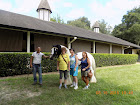 |
| Pat, me, and Pam in front of Gypsy Vanner horse |
 |
| Hogwarts at Universal Theme Park |
 |
| Hulk Roller Coaster |
 |
| Gypsy Vanner Horse This summer was full of travel for me and some friends. First, Pat Weaver, Irene Latham and I went to Richmond, Va, Williamsburg, Va and Chincoteague, VA. Then in another couple of weeks Pat's daughter invited us to share their suite in Orlando and we did two days of Universal and Island of Adventure. Boy was I tired! But what awesome rides. The simulated rides were the best. It felt good to play like a kid again While Pat was visiting me, she discovered the Gypsy Gold Farm These horses are a fairly new breed and they are beautiful You may think they are Clydesdale, but they are not as tall. I also got a free course on couponing. Not quite extreme. I got an awesome idea for a story or maybe a novel. The seed has been planted and is germinating as we speak What have you been doing this summer? Writing? Researching? Brainstorming? Leave a comment for a chance to win one of two books: Witherwood by Obert Skye or On Writing by Stephen King. Must reside in USA |
Sunday, August 9, 2015
August Book Giveaway Announced
I'm guessing you are anxiously waiting to see what books I am giving away in August.
Well you are in for a treat!


Witherwood Reform School by Obert Skye, illustrations by Keith Thompson. Pages 231
Copyright 2015, published by Christy Octavia Books a Henry Hot and company, LLC imprint.
Tobias and Charlotte Eggers may be a little more mischievous than most kids, but when they cross the line, their father loses it. He does what his father did to him, after all it worked for his father. He takes them to the top of the mesa and drops them off outside the creepiest, scariest building around. His plan was to let them think about what they did, while he drove down the hill. Then he would turn around, pick them up, and they would behave like good little children.
The only problem is he has an accident, and is unable to pick them up.
Tobias and Charlotte must fend for themselves.
The building turns out to be a school where kids are brainwashed. Wild animals surround the grounds, and these animals are strange animals, not like what we are familiar with.
Tobias and Charlotte are put to work, but at night they search the grounds, looking for a way out.
I can't wait to read the next book. I'm not going to tell you how the first one ends because it would spoil it for you.
Remember to leave a comment to be eligible to win the books. You must a USA address to win.
Check back to see if you have won.
Chris Bailey has won Janice Hardy book on Planning Your Novel. Please email me the address you would like your book sent to.
Sheila_renfro@cox.net
See you next week!
Well you are in for a treat!
Stephen King's "On Writing" and Obert Skye "Witherwood" are the books for August.
I've read Stephen King's "On Writing" last year and was amazed this brilliant writer has the same problems I have staring at the blank page. His first novel was not snapped up! He writes with one reader in mind, his wife. He says he trusts her judgment if she says something needs fixed.Witherwood Reform School by Obert Skye, illustrations by Keith Thompson. Pages 231
Copyright 2015, published by Christy Octavia Books a Henry Hot and company, LLC imprint.
Tobias and Charlotte Eggers may be a little more mischievous than most kids, but when they cross the line, their father loses it. He does what his father did to him, after all it worked for his father. He takes them to the top of the mesa and drops them off outside the creepiest, scariest building around. His plan was to let them think about what they did, while he drove down the hill. Then he would turn around, pick them up, and they would behave like good little children.
The only problem is he has an accident, and is unable to pick them up.
Tobias and Charlotte must fend for themselves.
The building turns out to be a school where kids are brainwashed. Wild animals surround the grounds, and these animals are strange animals, not like what we are familiar with.
Tobias and Charlotte are put to work, but at night they search the grounds, looking for a way out.
I can't wait to read the next book. I'm not going to tell you how the first one ends because it would spoil it for you.
Remember to leave a comment to be eligible to win the books. You must a USA address to win.
Check back to see if you have won.
Chris Bailey has won Janice Hardy book on Planning Your Novel. Please email me the address you would like your book sent to.
Sheila_renfro@cox.net
See you next week!
Sunday, August 2, 2015
Winners of July Books
 |
| This is a picture I took of Rainbow Warrior. He is a 20+ year old horse on Assateague Island. He was much farther away, but I was able to zoom in on him. They stay on Assateague Island and are rounded up once a year for auction. This is the 90th year! |
 |
| One of the newest foals. |
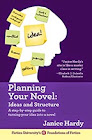 |
| Winner of the book: Planning Your Novel by Janice Hardy is Chris Bailey |
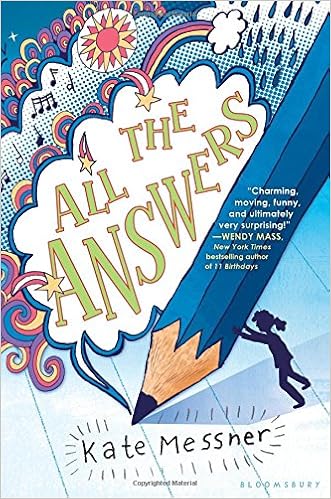 |
| The Winner of the book All the Answers by Kate Messner is Michelle Wallace
Winners, please send me the address you would like books shipped to. My email address is Sheila_renfro@cox.net
Next week I will announce the August book giveaways.
|
Monday, July 27, 2015
Figuring Out Your Writing Process
We have a very special guest with us today, Janice Hardy is the founder of Fiction University, and the author of the teen fantasy trilogy The Healing Wars, where she tapped into her own dark side to create a world where healing was dangerous, and those with the best intentions often made the worst choices. Her novels include The Shifter, (Picked as one of the 10 Books All Young Georgians Should Read, 2014) Blue Fire, and Darkfall from Balzer+Bray/Harper Collins. The first book in her Foundations of Fiction series, Planning Your Novel: Ideas and Structure is out now.


Figuring Out Your Writing Process
By
Janice Hardy, @Janice_Hardy
 Every novel needs a story, but how you develop that story
can happen any number of ways. For example, I'm an outliner who likes to know
what happens in every scene before I start the first draft. One of my critique
partners is a pantser who prefers to have a general idea of the story and jumps
in with little to no preparation. She figures out the plot as she sees what the
characters do in the novel. Still another friend writes her novels completely
out of order based on what scenes come to her and stitches them together
afterward to form a cohesive story.
Every novel needs a story, but how you develop that story
can happen any number of ways. For example, I'm an outliner who likes to know
what happens in every scene before I start the first draft. One of my critique
partners is a pantser who prefers to have a general idea of the story and jumps
in with little to no preparation. She figures out the plot as she sees what the
characters do in the novel. Still another friend writes her novels completely
out of order based on what scenes come to her and stitches them together
afterward to form a cohesive story.
All of these are perfectly valid ways to write, and
they couldn't be more different.
 Using a writing method that contradicts or doesn't
support your process might cause you to focus on the wrong things or stymie
your creativity. You might feel compelled to stick to an outline even when your
characters want to take the story in a different direction, or you could find
that plotting the story in great detail beforehand makes the novel no longer
fun to write (and thus it feels mechanical and boring).
Using a writing method that contradicts or doesn't
support your process might cause you to focus on the wrong things or stymie
your creativity. You might feel compelled to stick to an outline even when your
characters want to take the story in a different direction, or you could find
that plotting the story in great detail beforehand makes the novel no longer
fun to write (and thus it feels mechanical and boring).
To help understand how your own process works, grab a pen and paper (or screen and keyboard),
and answer the following questions:
1.
How many important events do you like to know about your story before you start
writing?
This
can help you determine where on the outline to pantser scale you fall. If you
know you lean more toward one side, you can focus your creative energy in ways
that support that.
Do
you like to know just the inciting event? Only the ending? Do you know just two
or three big moments? Do you like to know every chapter goal? Every scene goal? Or maybe you go in blind and
the fun is seeing how the story unfolds. You might even focus more on the
individual scenes vs. plot turning points, and you can immediately picture
several scenes you're already dying to write.
Think
about the novel you're currently writing. What are the key moments you know you
want in the book? What scenes do you know you want to write? When do you reach
the point where you think, "now I'm ready to write!"?
2.
Do you need to know your character arcs?
If
you're a character-driven writer, your stories might come from seeing how your
characters grow and change, and you'll crafts plots that allow those changes,
or happen organically as you write.
Do
you know how your characters change? Do
they change? Do you consider their emotional journey or focus more on the
external plot events? Do you use the character arc to create conflict in your
plot arc?
Think
about your characters and where you'd like them to be by the end of the novel.
Do you have character arcs in mind for them, or would you rather see how they
grow as you write the first draft?
3.
Do you plot off your reveals?
If
you’re writing a mystery or thriller, the story might hinge more on when information is revealed. If events
need to happen in a certain order, they can guide you through your plot.
When
do clues need to be found? Secrets revealed? Secrets discovered? Are there any
reveals that affect how the story will unfold?
Think
about what information you want to reveal to your readers and when that
information needs to come out. Does a large percentage of the plot depend on
these moments?
4.
Do you write towards a theme?
Themes
are a great unifying structure for outliners and pantser alike. Major thematic
elements can guide a story as easily as character goals. What problems best
exemplify your theme?
Are
there recurring themes that connect characters or story ideas? Do multiple
scenes, conflicts, or goals all focus on the same theme? Do your scenes mostly
explore the theme?
Think
about how strong theme is in your storytelling drive. Is it something that's determined
afterward, or is the entire story an illustration of this theme?
5.
What stops you writing?
Now
that you have a better idea of what you need to start writing, look for the
things that stop you writing. The
places you struggle with, the moments that drive you away from the keyboard.
Where
do you often stall in a story? Do you find yourself having to go back and
research something? Figure out a major plot point in the same basic area every
time? (Like middles bog you down, or that next big moment right after the
inciting event) Do you need to work on character arcs before you can move
forward?
Think
about the things that stop you. You might consider spending a little extra time
on them at the start and avoid hitting a wall later. Make them part of your
process so the writing itself goes smoothly.
Putting
it all together
You
might be the type of writer who needs just a general idea before diving into a
novel, or you might mix and match any of the above--deciding on a few major
plot events, the basic character arc turning point, and the big reveals to
create a rough outline. You might only know your theme and your protagonist and
run with it. Take a little time to think about how you’ve crafted your novels, what
worked, what roadblocks you hit and when, and discover the process that works best
for you.
For
those who aren't sure how much planning they need, try this basic six-point
outline for a little structure:
- What's your opening scene?
- What's the inciting event?
- What is the first major event that goes wrong or changes the path of your protagonist?
- What major surprise can happen in the middle?
- What is the moment when it all looks hopeless?
- How does it end?
A
writer’s process is a personal thing. A cookie-cutter template might not work
for you, but it doesn’t take a lot of work to create a guide that fits your
style and guides you onward.
Looking for tips on planning your novel?
Check out my book Planning Your Novel: Ideas
and Structure, a series of self-guided workshops that help you turn
your idea into a novel. It's also a great guide for revisions!
Leave a comment and you might win a copy of Janice's book!
Website | Facebook | Twitter | Goodreads
| Amazon
| Barnes &
Noble | iTunes
| Indie
Bound
Sunday, July 19, 2015
Planning Your Novel: Ideas and Stgructure by Janice Hardy
When I first started writing my work in progress, I had an idea, a beginning and ending.
Do you see anything missing here, like the middle?
That is why it took me years to finish the first draft!
I liked to write but other than poems that I would not dare share with anyone and a few short stories, I had never written a novel from beginning to end.
Then came the NaNoWriMo.
And I wrote garbage and it felt good. No one will ever see that mess! But it proved to me I could write and finish a novel. So the next year came around and I did NaNoWriMo again, and this time I finished my WIK. It wasn't too bad either. There are a few structural flaws and a lot editing yes, but I have the backbone down. The elusive middle has been filled.
So what does this "Planning Your Novel" have to do with this post,if I figured it out on my own?
For one thing, I could have saved myself years of going round and round in circles trying to figure out how to make the middle stand up and not lose track of where I wanted to go.
Why didn't I just outline and be done with it? You think I didn't try that? Ha!
At the Florida SCBWI Mid Year Workshop, Sara Pennypacker said that she writes her stories and then goes back to check to make sure it is structured correctly. That made me feel somewhat better, and that is how I will be using this book, this time. Hopefully the next novel won't take nearly as long as I will have found my writing/planning process.
In her book, "Planning Your Novel,"Janice Hardy says there is no right way or wrong way to plan your novel. Some writers use a mix of outlining, freestyle and panster. That was good news to me!
THEME:
Now that the novel is written there is this thing called "theme". I was having trouble figuring out what my theme is for this novel, a mystery. In workshop number four, she gives clear instructions on how to define your theme, and yes you can do this after the story is written, and yes it would be easier to do before your story is written (hint for next novel).
Planning Your Novel: Ideas and Structure is written in workshops, so you can go directly to the workshop you need to work on. Each has an exercise for you to do.
Janice Hardy also has a website in which she interviews authors on their writing process at Fiction University. I have found this book so helpful I'm keeping this one but have another one ordered and on the way for some lucky reader!
What is your writing process?
What are some of the problems you have or have resolved?
Please leave a comment to be eligible to win this book.
Next week Janice will be doing a guest blog here.
See you next week,
Sheila
Do you see anything missing here, like the middle?
That is why it took me years to finish the first draft!
I liked to write but other than poems that I would not dare share with anyone and a few short stories, I had never written a novel from beginning to end.
Then came the NaNoWriMo.
And I wrote garbage and it felt good. No one will ever see that mess! But it proved to me I could write and finish a novel. So the next year came around and I did NaNoWriMo again, and this time I finished my WIK. It wasn't too bad either. There are a few structural flaws and a lot editing yes, but I have the backbone down. The elusive middle has been filled.
So what does this "Planning Your Novel" have to do with this post,if I figured it out on my own?
For one thing, I could have saved myself years of going round and round in circles trying to figure out how to make the middle stand up and not lose track of where I wanted to go.
Why didn't I just outline and be done with it? You think I didn't try that? Ha!
At the Florida SCBWI Mid Year Workshop, Sara Pennypacker said that she writes her stories and then goes back to check to make sure it is structured correctly. That made me feel somewhat better, and that is how I will be using this book, this time. Hopefully the next novel won't take nearly as long as I will have found my writing/planning process.
In her book, "Planning Your Novel,"Janice Hardy says there is no right way or wrong way to plan your novel. Some writers use a mix of outlining, freestyle and panster. That was good news to me!
THEME:
Now that the novel is written there is this thing called "theme". I was having trouble figuring out what my theme is for this novel, a mystery. In workshop number four, she gives clear instructions on how to define your theme, and yes you can do this after the story is written, and yes it would be easier to do before your story is written (hint for next novel).
Planning Your Novel: Ideas and Structure is written in workshops, so you can go directly to the workshop you need to work on. Each has an exercise for you to do.
Janice Hardy also has a website in which she interviews authors on their writing process at Fiction University. I have found this book so helpful I'm keeping this one but have another one ordered and on the way for some lucky reader!
What is your writing process?
What are some of the problems you have or have resolved?
Please leave a comment to be eligible to win this book.
Next week Janice will be doing a guest blog here.
See you next week,
Sheila
Sunday, July 12, 2015
July Books Giveaways Plus Study in Plotting a Chapter Book
The winner of last month's Where Do You Get Your Ideas? by Fred White is Courtney Rene.
Please contact me to collect your prize.

For July we have All the Answers by Kate Messner AND
Janice will also be joining us Sunday July 26 for a guest blog.
Mark it on your calendar.
More about this next week. But be sure to leave a comment to be eligible to win.
Now on to my self study for plotting a chapter book.
I've been reading Barbara Seuling's book on How to Write a Children's Book and Get it Published.
In Chapter Ten- Writing Early Chapter Books Ms Seuling suggests reading a chapter a book and then write a one sentence summary for each chapter. By doing this I discovered how a plot and subplot coincide.
Each chapter mentions both the plot and subplot even if it is only a sentence or short paragraph.
Since I'm interested in writing mysteries I chose Oh No, It's Robert by Barbara Seuling. In the first chapter, Robert wants something to go on his family's award shelf. We learn about how Robert is not good at anything.
In chapter three the mystery is revealed: Who's scribbling in the books.
This exercise showed me how to plant clues, red herrings and how many and tie it in with the main plot.
What are you working on?
What do you struggle with?
See you next week!
Sheila
Please contact me to collect your prize.
For July we have All the Answers by Kate Messner AND
Planning Your Novel: Ideas and Structure by Janice Hardy.
Janice will also be joining us Sunday July 26 for a guest blog.
Mark it on your calendar.
More about this next week. But be sure to leave a comment to be eligible to win.
Now on to my self study for plotting a chapter book.
I've been reading Barbara Seuling's book on How to Write a Children's Book and Get it Published.
In Chapter Ten- Writing Early Chapter Books Ms Seuling suggests reading a chapter a book and then write a one sentence summary for each chapter. By doing this I discovered how a plot and subplot coincide.
Each chapter mentions both the plot and subplot even if it is only a sentence or short paragraph.
Since I'm interested in writing mysteries I chose Oh No, It's Robert by Barbara Seuling. In the first chapter, Robert wants something to go on his family's award shelf. We learn about how Robert is not good at anything.
In chapter three the mystery is revealed: Who's scribbling in the books.
This exercise showed me how to plant clues, red herrings and how many and tie it in with the main plot.
What are you working on?
What do you struggle with?
See you next week!
Sheila
Subscribe to:
Posts (Atom)
MORNING WALKS Good morning! These are two of the pictures I have taken on my morning walks. You can see more on my Facebook page. After ...

-
 Here is another contest and it's not too late. You have until 11:59 tomorrow night! Here is my entry to the 3rd annual Hallowees...
 -
 This years Kidlitsosphere Progressive Poem is based off song lyrics. I chose Pointer Sister's song, "We Are Family...
 -
Poetry month continues with a craft book on poetry and Irene Latham's Dear Wandering Wildebeest. By leaving a comment you will...
